


posted 26th January 2026
Recovering Safely at Home: Physiotherapy After Hospital Discharge
Returning home after a hospital stay can feel like a fresh start, but many older adults living alone find that the first days and weeks bring significant challenges. The transition can feel overwhelming for many, especially after a long hospital stay.
For example, Mrs. Craft, a 78-year-old recovering from pneumonia, noticed that walking from her bedroom to the kitchen left her breathless and unsteady. This is a common experience after hospital discharge. After a period of inactivity in hospital, muscle strength diminishes rapidly-even one week of reduced movement can lead to a 10-15% drop in leg strength-and balance control becomes compromised.
Without addressing these changes, even routine movements like walking across a room can become difficult, increasing the risk of falls and injury. It is normal to experience anxiety or concern during the return home process, and the psychological impact of a hospital stay can include increased levels of anxiety and feelings of isolation.
Many people feel anxious about managing without the immediate support of hospital staff after discharge. Physiotherapy provides a structured approach to gradually rebuild strength and balance, supporting steady improvements in movement week by week, restoring confidence in mobility, and reducing the likelihood of setbacks.
Why Recovery Can Stall After Hospital Discharge
During a long hospital stay, patients often spend extended periods resting-sometimes confined to bed or seated for many hours-which is necessary for healing but leads to physical deconditioning.
Consider Mr. Watts, a 72-year-old who, after just one week hospitalised for a hip fracture, found it difficult to stand from a chair without using his arms for support. This rapid muscle weakening and joint stiffness impair balance and coordination, making safe movement challenging.
Upon returning home, the environment changes abruptly. Carpets, rugs, doorsteps, and narrow hallways introduce trip hazards not present in the hospital setting. These obstacles increase fall risk if strength and balance have not sufficiently recovered.
Fatigue after minimal activity often causes people to reduce their movement further, deepening weakness. Additionally, fear of falling can lead to avoidance of walking or standing, perpetuating a cycle of decline.
When recovery stalls, the consequences can be serious. Falls become more likely, potentially resulting in injuries that require further medical intervention or rehospitalisation.
Loss of confidence in mobility may cause individuals to restrict their activities, leading to social isolation and emotional distress. Delays in regaining independence increase reliance on carers or family members for daily tasks, negatively impacting quality of life.
Without timely intervention, these issues form a difficult cycle to break, prolonging rehabilitation. Physiotherapy addresses these challenges by focusing on improving strength, balance, and safe movement within the actual home environment, thereby reducing fall risk and supporting a return to independence.
Common Challenges at Home
After hospital discharge, everyday activities that were once routine can become exhausting or unsafe, especially for older adults recovering from illness or falls.
Mobility issues such as difficulty walking or standing are common and can significantly impact independence.
Mrs. Knight, an 80-year-old living alone after hip surgery, struggled to prepare meals because standing for more than a few minutes caused dizziness and weakness. Such fatigue can lead to skipped meals and poor nutrition, further impairing recovery.
Balance impairments increase fall risk and undermine confidence. When fear of falling develops, many people limit their movements and remain seated for extended periods.
This inactivity accelerates muscle loss and joint stiffness, making it harder to regain independence. Difficulties with tasks such as climbing a single step or reaching for items on a shelf can escalate into needing assistance with dressing or personal care.
Without intervention, these challenges may significantly delay recovery and increase dependence on others. Physiotherapy targets these issues directly, helping rebuild strength and confidence so daily tasks can be completed more safely.
Why Early Physiotherapy Matters
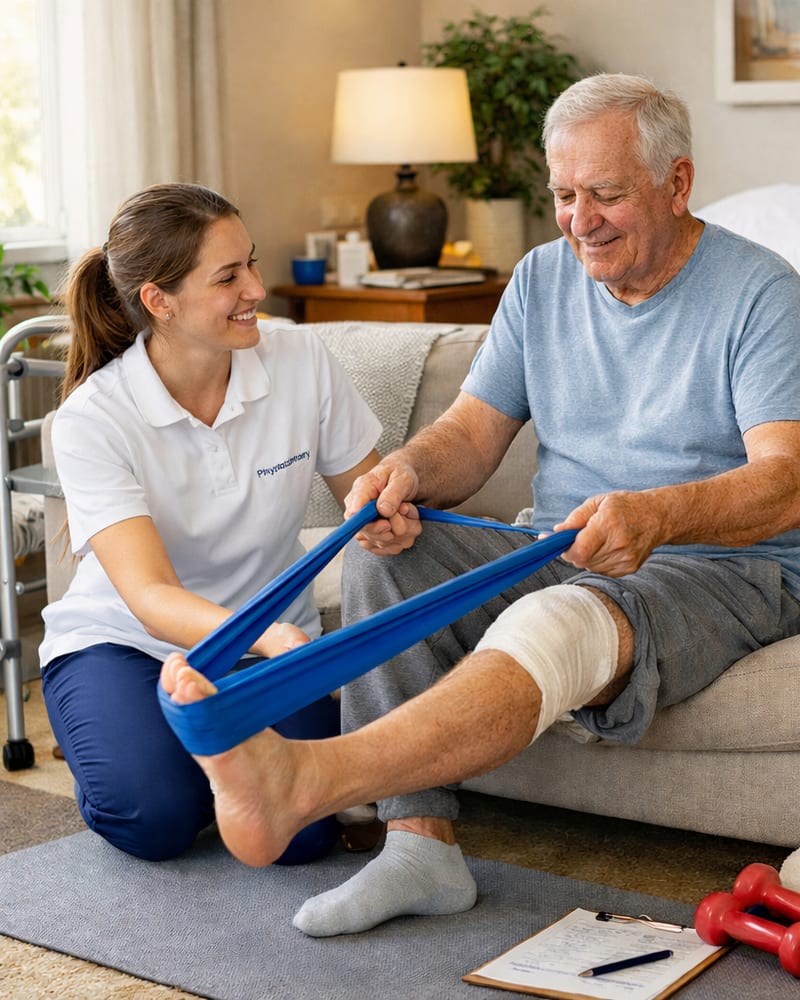
The first step in physiotherapy after hospital discharge is an initial assessment. This assessment establishes a baseline for recovery and allows the physiotherapist to tailor a personalised rehabilitation plan.
Initiating physiotherapy soon after hospital discharge is crucial to reverse the effects of inactivity and prevent complications. Early intervention supports gradual increases in activity levels without overexertion, reducing fatigue while rebuilding strength and balance.
For example, Mr. Lee, a 75-year-old recovering from a stroke, was initially hesitant to walk at home due to fear of falling. His physiotherapist provided balance training and education on safe movement strategies tailored to his home environment.
Practising real-life scenarios during therapy sessions helped Mr. Lee regain confidence in daily activities. Over several weeks, his mobility improved incrementally, and his confidence in moving independently increased.
Physiotherapy is not limited to exercises alone. It includes practical advice on managing daily tasks safely, modifying the home environment to reduce hazards, and supporting confidence that may have been lost during a hospital stay.
This personalised support helps prevent falls and hospital readmissions by promoting steady progress and long-term functional independence.
What to Expect from a Home Physiotherapy Visit
During a physio home visit, a physiotherapist conducts a comprehensive assessment of your movement patterns and daily challenges within your living environment.
This may include observing how you stand up from a chair, sit down safely, walk between rooms, or maintain balance while turning or reaching.
Based on this assessment, the therapist develops a personalised rehabilitation plan targeting your specific needs and goals.
Treatment focuses on improving strength, balance, and coordination in a safe and controlled way, supporting gradual improvements in mobility.
The physiotherapist may also identify trip hazards such as loose carpet edges or clutter and recommend simple changes to improve safety.
Education is provided to family members or carers to help them support recovery safely and confidently. This practical, home-based approach reduces fall risk and supports a smoother recovery trajectory.
Physiotherapy Support in Colchester
For individuals in Colchester and surrounding areas, home physiotherapy provides essential clinical support during the critical period after hospital discharge.
In Colchester, home physiotherapy is led by Catherine Fussell, an experienced physiotherapist who supports people recovering at home after hospital stays, with a focus on safety, confidence, and regaining independence.
Receiving physiotherapy in your own home allows treatment to focus on the exact challenges you face day to day, making recovery more relevant and effective.
Warning signs that indicate the need to seek physiotherapy support include persistent difficulty with walking or standing, increasing fatigue after minimal activity, near-falls or actual falls, worsening balance, and difficulty managing everyday tasks safely.
If you or a loved one notice these signs after hospital discharge, timely physiotherapy intervention can significantly improve recovery outcomes and reduce the risk of further health issues.
Frequently Asked Questions
When should physiotherapy start after hospital discharge?
Physiotherapy can usually begin as soon as someone is medically stable and safely home. Early physiotherapy helps address weakness, balance problems, and reduced confidence before they lead to further setbacks.
Is physiotherapy helpful even if no surgery was performed?
Yes. Many people struggle after hospital discharge due to illness, infection, falls, or reduced mobility rather than surgery. Physiotherapy focuses on restoring strength, balance, and safe movement regardless of the reason for hospital admission.
Is home physiotherapy better than attending a clinic?
For many people after hospital discharge, home physiotherapy is more suitable. It allows treatment to focus on real-life tasks such as standing up, walking around the home, and managing stairs, while reducing the risk and fatigue associated with travel.
How do I know if my recovery is not progressing as it should?
Warning signs include ongoing difficulty with walking or standing, increasing fatigue after minimal activity, repeated near-falls or falls, worsening balance, or difficulty managing everyday tasks safely. If these issues persist, physiotherapy support can help prevent further decline.