Preparing for Surgery: Prehabilitation
Getting ready for your hip replacement involves more than just the operation itself. Starting physiotherapy exercises at least 3 to 4 weeks before surgery can make a significant difference in your recovery.
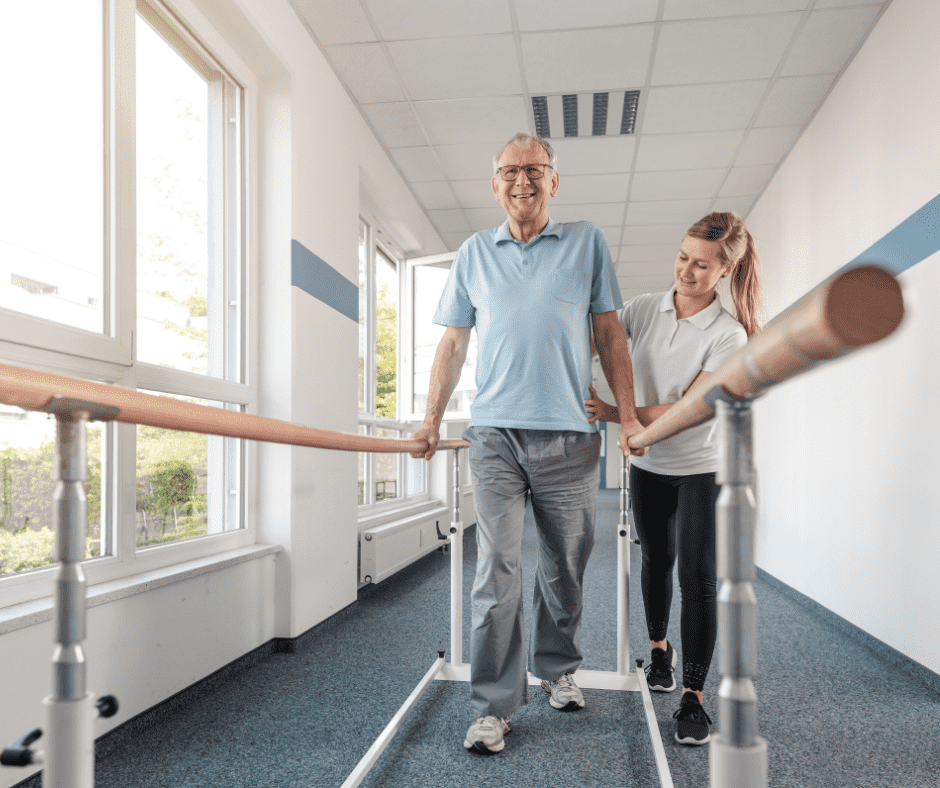
Your physiotherapist will guide you through exercises such as walking and swimming to maintain joint flexibility and strengthen muscles around your hip. Improving your general health and cardiovascular fitness through moderate-intensity activities also prepares you for surgery and rehabilitation.
This pre-surgery phase builds a solid foundation, helping you move more confidently through your post-operative rehab.
Immediate Post-Operative Care
The days following your surgery are crucial for setting the right pace for recovery. You will spend time in recovery receiving pain relief and support to manage surgical discomfort. Most people are discharged within 1 to 3 days, with clear instructions for after hip surgery rehab.
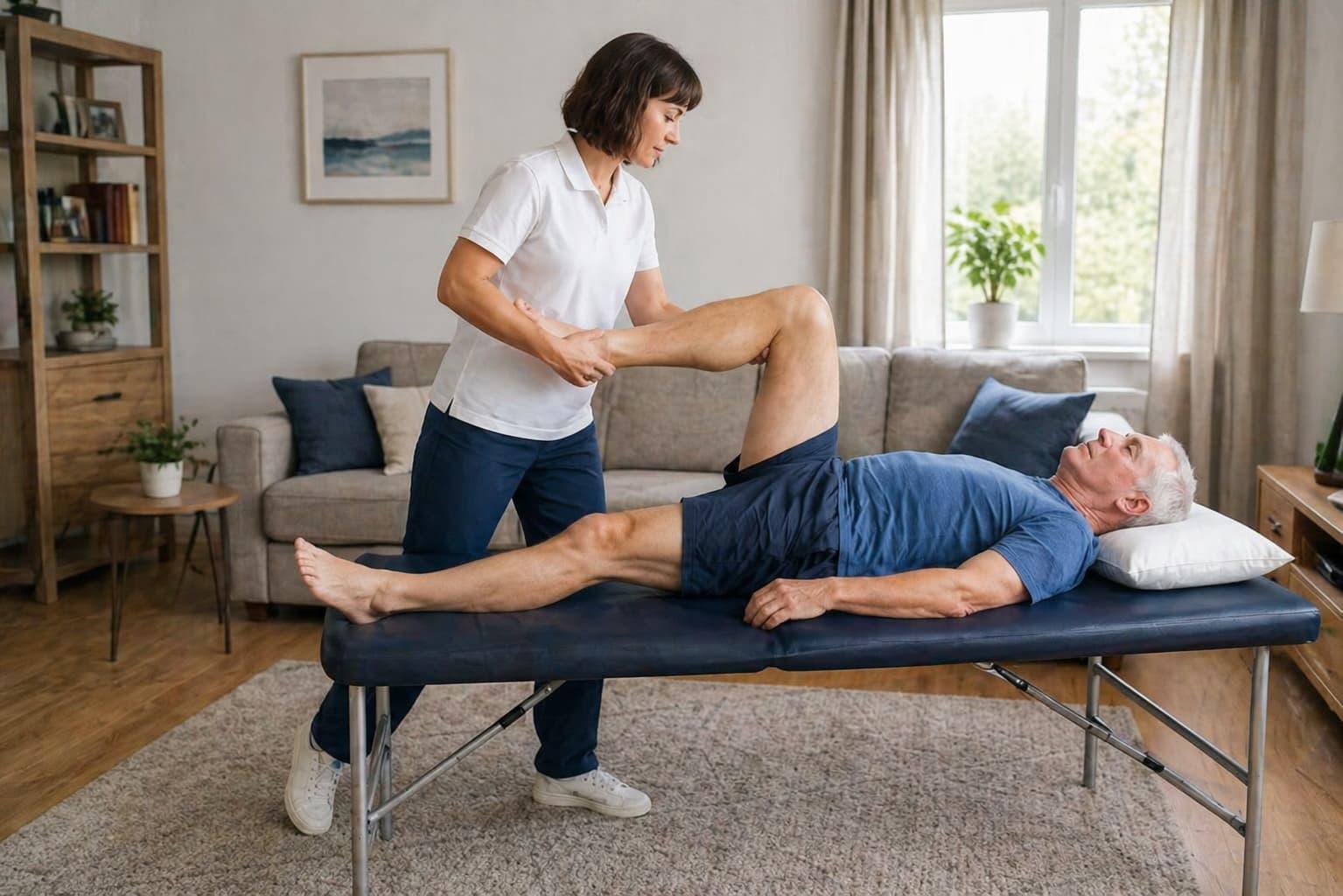
Early post-operative physiotherapy is key. Simple exercises like ankle pumps and knee bends with knees bent help improve circulation and muscle activation. Your physiotherapist will advise you on hip precautions to prevent complications, such as avoiding crossing your legs or sitting in low chairs.
Walking daily within your comfort zone is encouraged, alongside gentle stretches and gradually increasing exercise intensity. Following these guidelines reduces the risk of post-operative complications and promotes healing.
Important Hip Precautions After Surgery
- Avoid bending your hip beyond 90 degrees
- Do not cross your legs or ankles
- Avoid twisting your hip when turning
- Use higher chairs and avoid low seating positions
These precautions are typically followed in the early stages of recovery to reduce the risk of complications and support safe healing.
Clinical insight: Early movement and correct exercise progression are key factors in reducing complications and improving long-term recovery after hip replacement surgery.
Recovery insight: Research shows that early mobilisation — including walking, exercising, eating, and drinking soon after surgery — is associated with faster recovery and improved outcomes following hip replacement.
Hip Replacement Recovery Timeline
Recovery after hip replacement follows a gradual progression, with each stage building on the last. While everyone progresses at a slightly different pace, understanding what to expect can help you stay confident and on track.
- Weeks 1–2: Focus on pain management, short walks, and basic exercises to improve circulation and muscle activation.
- Weeks 3–6: Increasing strength and mobility, with improved walking distance and reduced reliance on walking aids.
- Weeks 6–12: Greater independence with daily activities, improved balance, and more advanced strengthening exercises.
- 3–6 months: Return to most normal activities, with ongoing improvements in strength, confidence, and endurance.
Progression should always be guided by your symptoms and overall function, rather than rushing through stages. A structured approach helps ensure safe and effective recovery.
Early Recovery Exercises
In the first weeks after surgery, simple physiotherapy exercises for hip replacement focus on improving circulation and muscle function. Ankle pumps every 5 to 10 minutes enhance blood flow, while ankle rotations maintain joint flexibility.
Buttock muscle contractions, holding the squeeze for five seconds, strengthen the gluteal muscles. Quadriceps sets, involving tightening the thigh muscle with the knee straight, build thigh strength. These exercises should be done regularly throughout the day to support recovery.
As you progress, your physiotherapist will introduce standing knee raises and standing hip abduction to further improve hip muscle strength and flexibility. Regular practice of these exercises supports knee stability and overall mobility.
Common Early Hip Replacement Exercises
- Ankle pumps: Move your feet up and down regularly to improve circulation and reduce the risk of blood clots.
- Quadriceps sets: Tighten the thigh muscle by pushing the back of your knee into the bed, holding for 5–10 seconds before relaxing.
- Gluteal sets: Squeeze your buttock muscles for 5–10 seconds to build support around the hip joint.
- Heel slides: Slide your heel towards your bottom while lying on your back to improve hip flexion and mobility.
Strengthening Hip Muscles
Building strength around your hip joint is essential for a successful total hip replacement rehab protocol. Exercises like air squats, straight leg raises, and standing hip abduction target the thigh and buttock muscles, improving stability.
Perform these exercises in sets of 10 to 15 repetitions, focusing on controlled movements. Using resistance bands can add challenge and enhance muscle engagement.
Your physiotherapist will ensure you maintain proper leg alignment during exercises, preventing strain and promoting effective hip movement.
Progressive Strength Exercises
- Standing hip abduction: Hold onto a support and lift your operated leg out to the side, then return slowly with control.
- Standing knee raises: Lift your knee toward your chest (no higher than waist height) to build strength safely.
- Bridging: Lie on your back with knees bent, lift your pelvis, hold for a few seconds, and lower slowly.
- Mini squats: Strengthen the lower body while ensuring the hip does not bend beyond 90 degrees.
Improving Hip Flexion and Extension
Regaining full range of motion is a priority after hip replacement. Daily exercises lasting 20 to 30 minutes help restore hip flexion and extension.
Standing knee raises and hip extension exercises improve hip mobility and strength. Incorporating low-impact activities like cycling on a stationary bike with low resistance supports endurance and flexibility.
These exercises complement your overall rehabilitation plan, helping you enjoy the benefits of your new hip joint.
When to Seek Physiotherapy Support
While many people recover well with a structured exercise programme, there are times when additional support can make a significant difference.
- Ongoing pain that isn’t improving
- Difficulty walking or reduced confidence with movement
- Feeling unsure whether you are progressing correctly
- Stiffness or weakness limiting daily activities
Physiotherapy provides guidance, progression, and reassurance throughout your recovery. A tailored approach helps ensure you are doing the right exercises at the right stage, reducing the risk of setbacks and improving long-term outcomes.