

posted 24th November 2025
Physiotherapist for Knee Replacement: Your Complete Recovery Guide
Key Takeaways
Professional physiotherapy is essential for successful knee replacement recovery, starting within 24-48 hours post-surgery
Recovery progresses through distinct stages over 3-6 months, each requiring specific exercises and physiotherapy approaches
Home-based physiotherapy offers personalized care in familiar surroundings across Essex, Chelmsford, Colchester and London
Early intervention by qualified physiotherapists reduces complications and accelerates return to daily activities
Estuary Physio provides specialized knee replacement rehabilitation with evidence-based treatment protocols
The success of your knee replacement surgery depends not just on surgical skill, but on the quality of physiotherapy care you receive in the critical weeks that follow. Whether you’ve undergone total knee replacement surgery or partial knee replacement, professional physiotherapy guidance transforms your recovery from a challenging ordeal into a structured journey back to full mobility and everyday activities.
Research shows that patients who receive expert physiotherapy care achieve significantly better outcomes - with over 80% able to bend their operated knee beyond 90 degrees within the first week, and function scores improving more than twofold by three months compared to pre-operative baselines. This comprehensive guide explains why a physiotherapist for knee replacement is essential, what to expect during each recovery stage, and how Estuary Physio’s home-based approach supports your rehabilitation across Essex, Chelmsford, Colchester, and London.
Why You Need a Physiotherapist After Knee Replacement Surgery
Joint replacement surgery represents a significant medical intervention that requires specialized rehabilitation to achieve optimal outcomes. While your orthopaedic surgeon focuses on the technical success of your knee replacement surgery, a qualified physiotherapist ensures your new knee joint functions properly and integrates seamlessly into your daily movement patterns.
The immediate post-operative period following total knee replacement surgery creates several physiological challenges that demand professional intervention. Your quadriceps muscles weaken rapidly after surgery, sometimes losing up to 20% of their strength within the first week. Without proper strengthening exercises guided by a physiotherapist, this muscle weakness can persist for months, compromising your operated leg’s function and increasing fall risk.
Professional physiotherapy also prevents serious complications that can derail your recovery. Blood clots, joint stiffness, and wound healing issues all respond better to early, appropriate intervention. A physiotherapist monitors these risks while implementing circulation-enhancing exercises and mobility strategies that significantly reduce complication rates.
The timing of physiotherapy intervention proves crucial for optimal outcomes. Starting within 24-48 hours post-surgery, while you’re still in the recovery room or shortly after, sets the foundation for successful rehabilitation. Hospital physiotherapy provides essential initial care, but specialized home-based physiotherapy offers continuity and personalized attention that hospital settings cannot match.
Research demonstrates that patients receiving structured physiotherapy achieve better knee range of movement, faster return to independence, and superior long-term function compared to those attempting self-directed recovery. Your physiotherapy team becomes your guide through the complex process of relearning movement patterns, rebuilding strength, and returning to the physical activities you enjoy.
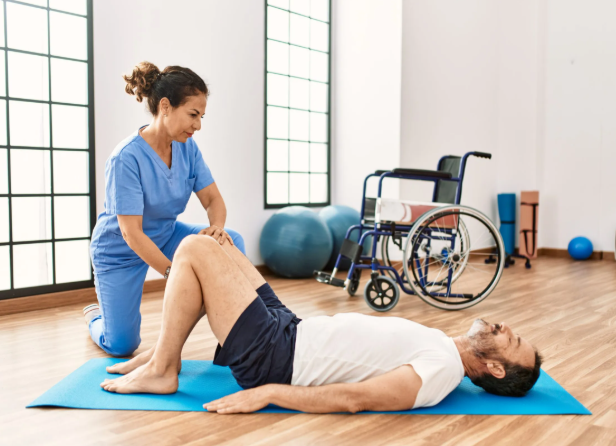
Early Stage Recovery: Weeks 1-3 Post-Surgery
The immediate weeks following your knee replacement surgery establish the foundation for your entire recovery. During this critical period, your physiotherapist focuses on four primary objectives: managing pain and swelling, preventing complications, restoring basic mobility, and initiating the strengthening process for your operated limb.
Pain and swelling management begins immediately, with your physiotherapist teaching you proper positioning, ice application, and elevation techniques. These seemingly simple interventions significantly impact your recovery speed and comfort level. Professional guidance ensures you apply these techniques correctly and safely, maximising their effectiveness while protecting your healing tissues.
Basic mobility restoration starts with transfers - moving safely in and out of bed, getting up from a chair, and initial walking attempts. Your physiotherapist assesses your home environment and teaches you how to navigate stairs, use bathroom facilities safely, and manage daily tasks while protecting your new knee joint. This functional training in your actual living space proves invaluable for building confidence and preventing falls.
Essential Early Stage Exercises
Static quadriceps exercises form the cornerstone of early rehabilitation. Your physiotherapist teaches you to activate these crucial muscles through isometric contractions - tightening your thigh muscles without moving your knee joint. These static quads exercises combat the rapid muscle weakening that occurs after surgery while protecting your healing tissues.
Straight leg raise exercises begin once you demonstrate adequate quadriceps control. Your physiotherapist guides you through proper technique, ensuring you can lift your straight leg while keeping your foot flexed and maintaining control throughout the movement. This exercise targets multiple muscle groups while promoting circulation and joint mobility.
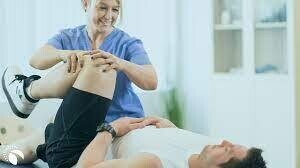
Gentle knee flexion exercises start with simple movements like slowly bending your operated knee while lying in bed. Your physiotherapist monitors your range of movement progress, ensuring you achieve safe, progressive improvements without forcing movement that could damage healing tissues. A rolled up towel placed under your heel can support these early flexion exercises.
Breathing and circulation exercises prevent dangerous blood clots while promoting healing. Your physiotherapist teaches ankle pumps, circles, and calf contractions that maintain blood flow in your operated leg and throughout your lower extremities. These exercises prove particularly important during periods of reduced mobility.
Estuary Physio’s early physio home visits across Essex provide personalized attention during this vulnerable recovery phase. Your physiotherapist arrives equipped with necessary tools and knowledge of your specific surgical procedure, delivering professional care in the comfort and safety of your own home.
Middle Stage Recovery: Weeks 3-8 Post-Surgery
As your initial healing progresses, your physiotherapy focus shifts toward rebuilding strength, expanding knee range, and preparing for more demanding functional activities. This middle recovery phase requires careful progression under professional guidance to avoid setbacks while maximising improvement potential.
Range of movement expansion becomes a primary objective, with most patients achieving knee flexion of 90 degrees or more during this period. Your physiotherapist employs various techniques to safely improve your knee range, including manual therapy, stretching protocols, and progressive exercises that encourage natural movement patterns. Achieving adequate knee flexion proves essential for activities like climbing stairs, getting in and out of cars, and sitting comfortably in chairs.
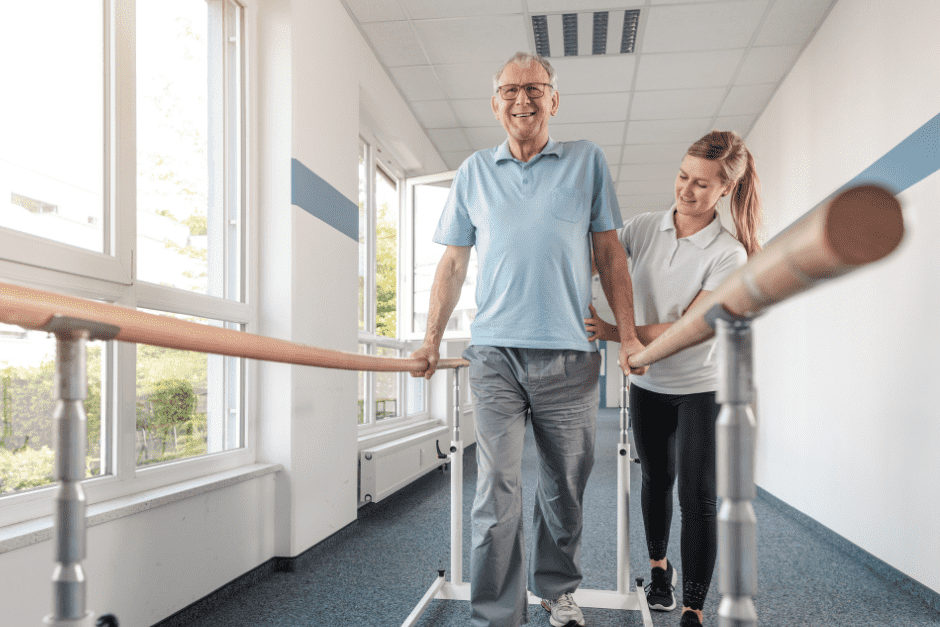
Weight-bearing exercises progress systematically under your physiotherapist’s supervision. You transition from partial weight-bearing with aids to full weight-bearing as your comfort and strength improve. This progression must be carefully managed to protect your healing joint while challenging your muscles appropriately.
Functional movement training becomes increasingly important as you prepare to resume normal activities. Your physiotherapist works with you on sit-to-stand transfers, stair climbing techniques, and walking pattern corrections. These functional skills directly translate to improved independence and confidence in your daily activities.
Balance and proprioception training addresses the sensory changes that occur after knee replacement surgery. Your new knee joint lacks the natural feedback mechanisms of your original joint, requiring specialized training to restore stability and prevent falls. Your physiotherapist incorporates various balance challenges that safely rebuild these essential skills.
Home Physiotherapy Support After Knee Replacement
Recovering from knee replacement surgery at home can feel challenging, particularly during the early and
middle stages of rehabilitation. Having physiotherapy support delivered in your own environment allows
exercises and functional training to be tailored to your daily routines, stairs, seating, and mobility
demands.
Estuary Physio provides home-based physiotherapy following knee replacement surgery in
Chelmsford and Colchester, with wider support available across Essex and London. Our physiotherapists focus on restoring movement, rebuilding strength, improving balance, and supporting confidence as you progress through each stage of recovery.
If you are unsure what level of support you need after surgery, we are happy to advise and help you plan
a safe, structured rehabilitation programme at home.
Reviewed by Barry Ford BSc, Chartered Physiotherapist.